About Me
I am an Assistant Professor at the Economics Department at Boston University.
My research and teaching interests are development economics, industrial organization, and healthcare economics.
You can find my CV here.
Publications
Targeting Impact versus Deprivation
With Johannes Haushofer, Edward Miguel, Michael Walker and Paul Niehaus
Abstract
A large literature has examined how best to target anti-poverty programs to those most deprived in some sense (e.g., consumption). We examine the potential tradeoff between this objective and targeting those most impacted by such programs. We work in the context of an NGO cash transfer program in Kenya, employing recent advances in machine learning methods and dynamic outcome data to learn proxy means tests that jointly target both objectives. Targeting solely on the basis of deprivation is not attractive in this setting under standard social welfare criteria unless the planner’s preferences are extremely redistributive.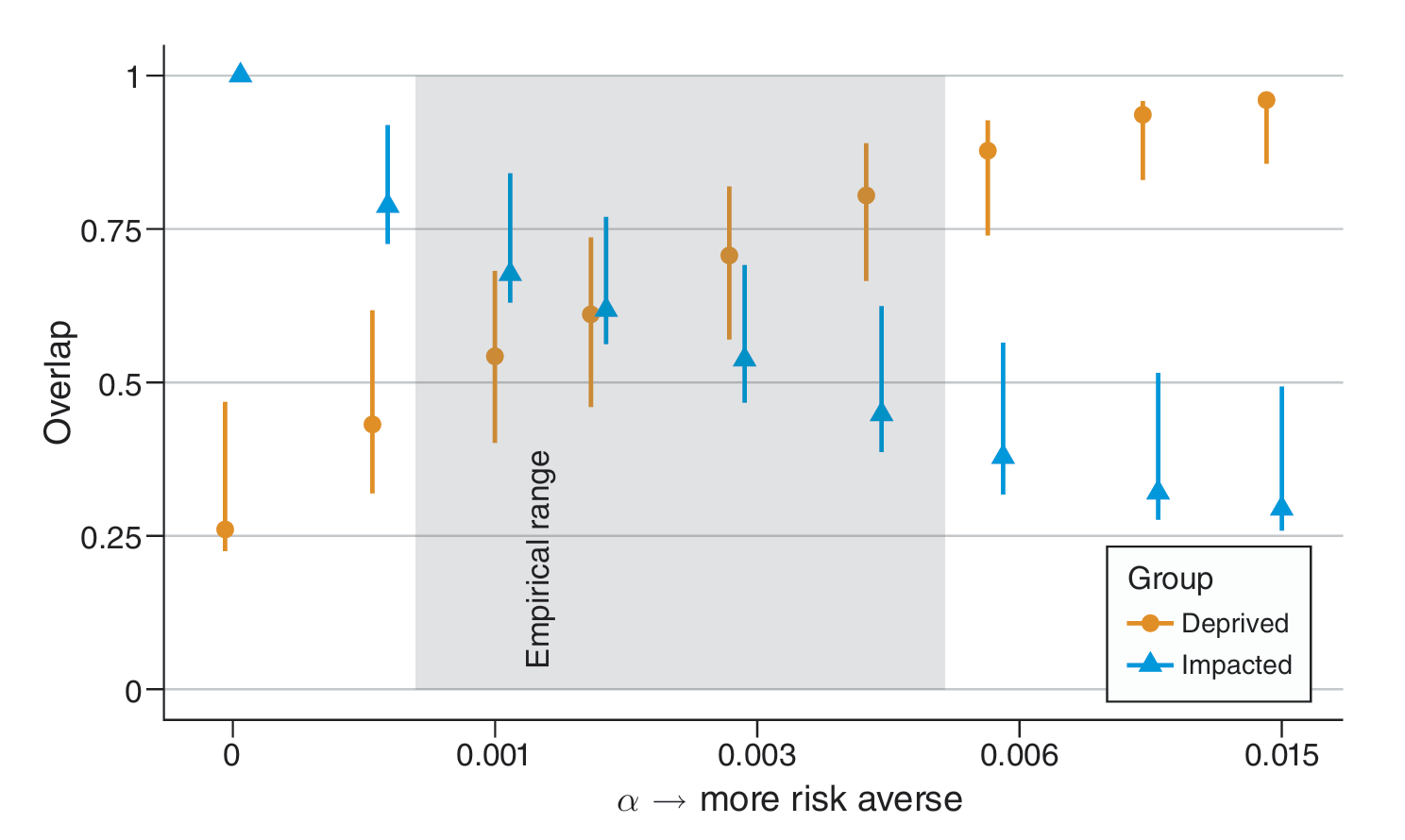
Working Papers
Who calls the shots? Financial incentives and provider influence in the adoption of a new health technology
With Maria Dieci and Paul Gertler
Abstract
The choice to adopt an effective healthcare product is often a joint decision between the patient and their medical professional. Many governments and payers use patient subsidies and provider incentives to increase the adoption of new health technologies. Using data from a randomized field experiment in Kenya, we estimate a structural model of patient demand and provider advice for a new contraceptive method. We then use the model to study the welfare effects to the patient from the introduction of demand and supply side incentives to adopt the new technology. This approach allows the study of channels that promote diffusion, including the roles of provider advice, financial incentives and altruism, as well as patient preferences. Taken together, the results suggest that changes in provider advice due to their altruism and financial incentives are key to increasing adoption of the new technology and making incentive programs effective, regardless of whether the incentive targets the patient or the provider. In fact, changes in provider advice account for roughly 95% of the welfare benefits of a policy that reduces the price to the patient. To be effective, incentive policies need to account for the central role that the provider takes in medical decision-making.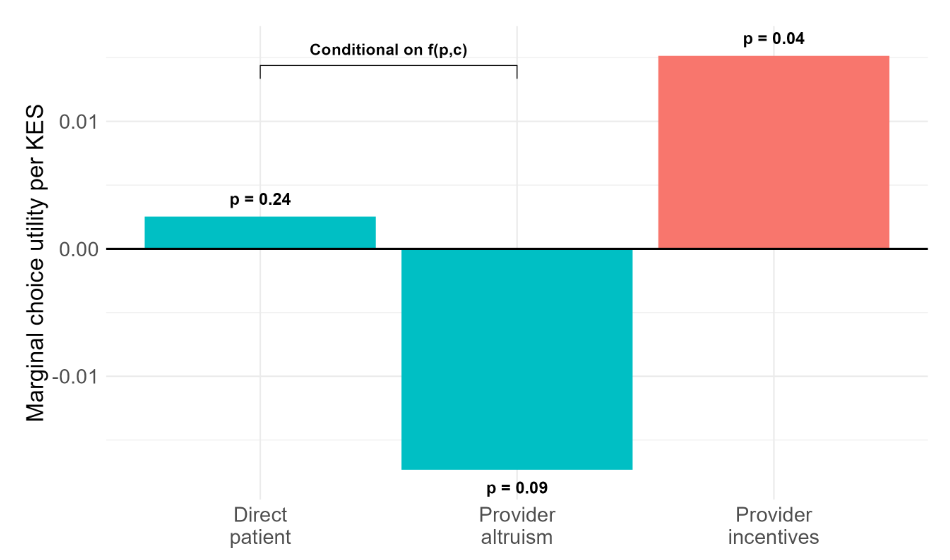
Tying Incentives to Information: Diagnosis-Contingent Contracts and Biased Beliefs in Healthcare
With Maria Dieci, Paul Gertler, and Jonathan Kolstad
Abstract
Unnecessary treatment reflects a gap between what patients believe about their health and their true condition; people often seek and consume care for diseases they suspect, but do not know that they actually have. The value a patient places on diagnostic testing therefore depends on their priors about being sick. When those beliefs are biased, the resulting testing rate might be sub-optimal and leave welfare on the table. We study diagnosis-contingent incentive contracts, which tie treatment incentives to diagnostic results. For malaria, the contract subsidizes rapid diagnostic tests (RDTs) and antimalarials (ACTs) only for patients who test positive. In a cluster-randomized experiment across 140 Kenyan pharmacies, both patient subsidies and provider incentives roughly tripled testing and sharply reduced unnecessary ACT purchases among test-negative patients, working through distinct channels: patient subsidies through lower prices, provider incentives through information and advice. A model of patient choice implies these contracts raise social welfare well above their cost. Estimating the model structurally, we find that because patients substantially overestimate their infection risk, loading incentives onto diagnosis-contingent treatment discounts delivers four times the welfare gains of free testing programs.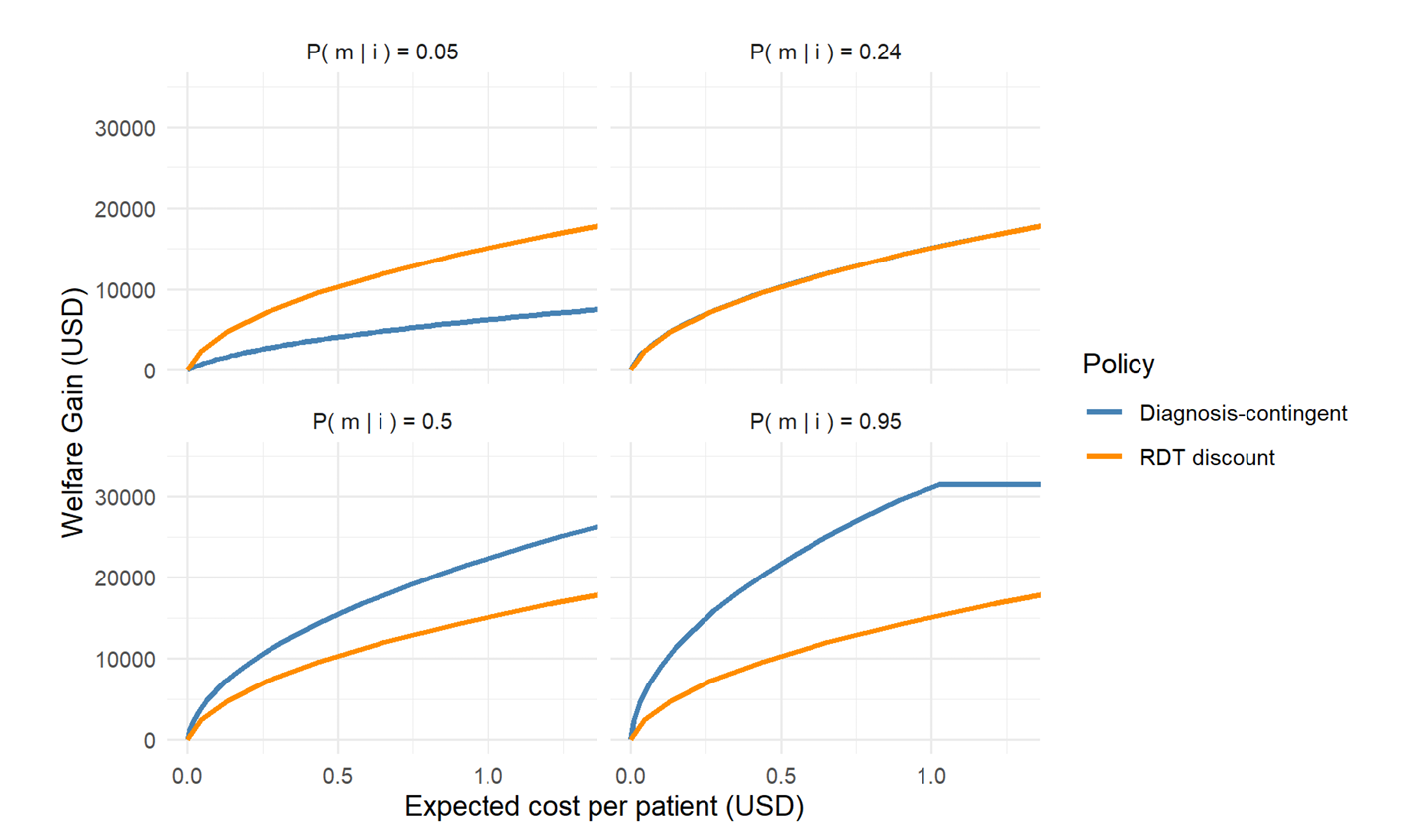
Works in progress
Pediatric fever care in Ugandan pharmacies (funded by the WAM Foundation)
With Maria Dieci
Demand for generic medications and unobserved product quality in Mexico
With Adrian Rubli